


I get a strange feeling when I go to Europe and see the sights. There’s always a sense of awe. But there’s also a feeling of unease—I look up at these architectural masterpieces that have persevered through time, and the feeling is something like: what would the pagans have built? Touring the European wine regions as a wine writer in Appalachia, I find myself wishing that my industry did a better job at confronting the problematic history of which wine has been a sacrament. The fortressed cities, the abbeys where monks plotted iconic vineyards…these are artifacts of not just wine, but also a social system that accumulated exorbitant wealth through exploiting the working class and re-fashioning slavery. Has the wine world in America, in our quest to know and embody the artistic and romantic elements of wine’s history, accidentally internalized this?
In her critique of feminist and socialist historical narratives, Caliban And The Witch: Women, The Body, And Primitive Accumulation, Silvia Federici writes, “Contrary to the schoolbook portrait of feudal society as a static world, in which each estate accepted its designated place in the social order, the picture that emerges from a study of the feudal manor is rather that of relentless class struggle.” Between 1000 and 1300 AD, the Catholic Church reached the height of its power by creating political blocks between the peasants and wealth. They imposed taxes when you died, taxes for your heirs to access their inheritance, 10% of your income, and the tallage, a tax that could be imposed at any time, for any amount of money, for any reason. Between this time and the 14th century, peasants and serfs pushed back on this massive wheel of wealth and sought as much sovereignty as they could claim.
Serfdom was a system that emerged after the Roman Empire fell and the slave system, on which its economy relied, broke down. It created a class of agricultural laborers who weren’t technically the personal property of the land owners, but they were bound to the land, which WAS the property of the landlords. Their freedom was severely limited. The social structure was so buoyed by the wealth it accumulated that it took the Black Death, which wiped out one third of the population, to give serfs any kind of political leverage due to a labor shortage. Finally, after centuries of resistance, feudalism begins to fade into history. But wine’s absurdly wealthy image persisted.
To study wine is to study European history, especially through the Middle Ages. Educational texts geared towards American students of wine emphasize this time period, where the Church used wine for Mass and the nobility used it to crown kings. Nobility often created political barriers for rural communities tending easier-to-work-with grapes, most famously done by Philip the Bold, who in 1395 outlawed Gamay from the Burgundy region because the peasants were working with it, and he felt the grape, associated with lower-class farmers, would undermine the status of Burgundy. Wine, it is taught, has always been a drink of privilege, associated with wealth and power.
Here in the United States, we’ve taken on the habit of introducing new wine regions to the world by establishing a brand of elitism, as if to demonstrate that it, too, could be fit for kings, is to validate it. As we see in Napa, this has resulted in an excessive monoculture that has put the industry at odds with local environmental groups, and an oversupply due to its inability to resonate with today’s generation, who are squeezed by a worsening economy.
For wine regions that haven’t established a national or international identity, like many here on the East Coast, there is an opportunity to create a different kind of wine culture, one that takes from the history of the land it occupies, rather than mimicking what we think worked in medieval Europe.
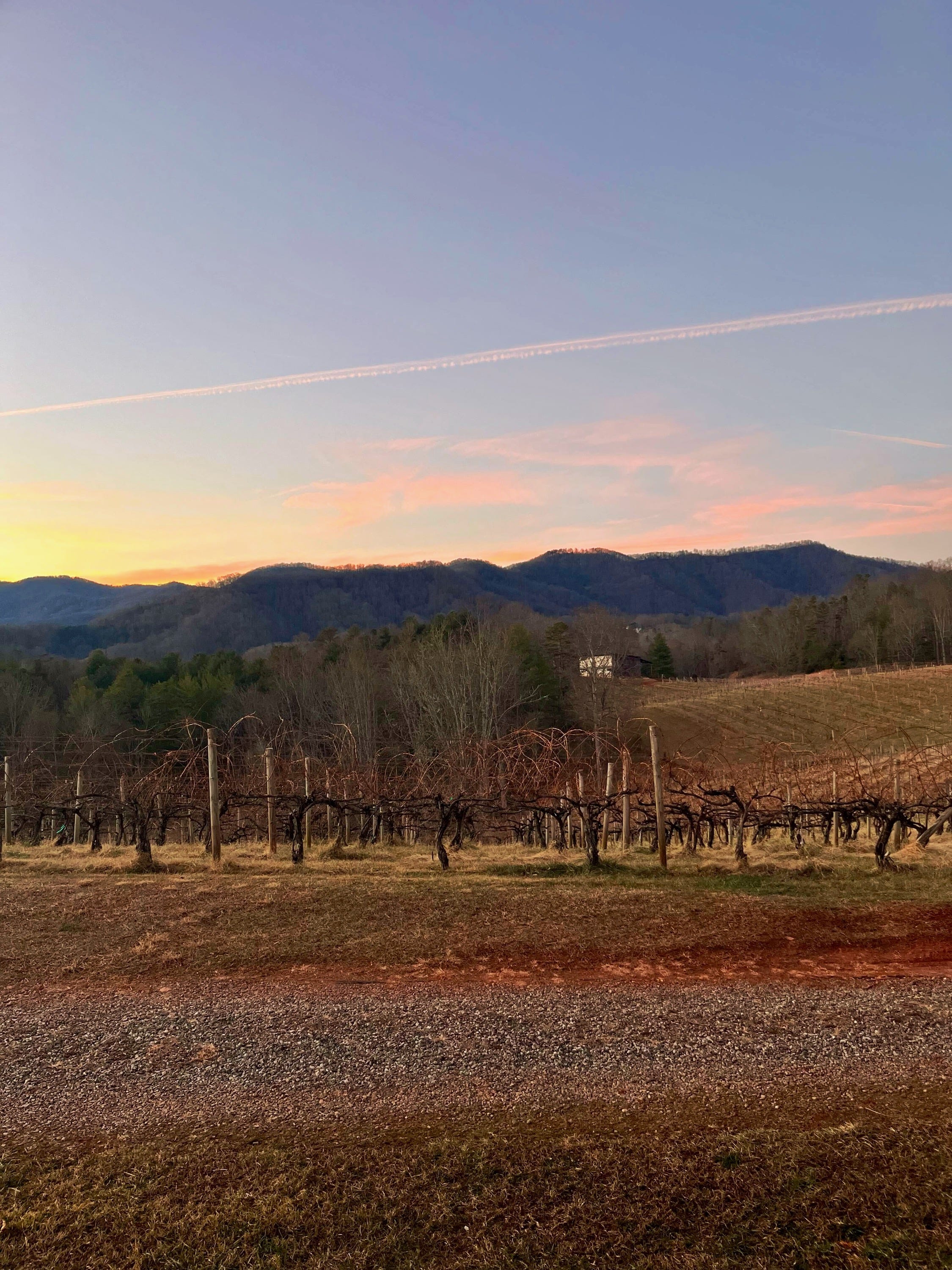
What was happening on the East Coast of what would be the United States while the Catholic Church was hoarding wealth over in Europe?
In Southern Appalachia, growing populations of indigenous communities were developing more complex societies. Just as textbook teachings falsely led us to believe that medieval society operated as a static dynamic, so too have they incorrectly recorded that my region of Southern Appalachia, western North Carolina, was wild and unsettled. On the contrary, horticulture existed in this region as early as 2500 BC, and this region was part of the Lamara and Qualla culture areas—the Qualla were ancestral to the Cherokee people.
In The Southern Appalachians: A History Of The Landscape, Susan L. Yarnell writes this: “The Southern Appalachians were cultural landscapes deeply influenced by human activity. Towns, farmsteads, and fields were interspersed with old-growth forest used primarily for hunting and gathering nuts. Secondary forests grew on old fields in various stages of regrowth, providing fuel, building supplies, and an augmented supply of wild plant foods and game. Human use of fire reduced underbrush in some places and contributed to prairie openings, which drew deer and bison…The product of 10,000 years of human activity, this landscape was not an unpeopled wilderness. The customs established over thousands of years would continue to shape the environment over the next several centuries.”
Eventually, these two histories converge with the imperialist conquests of the Americas. For those who wish to maintain a romantic idea of colonialism, the myth that this land was unsettled and that Indigenous communities who lived here at the time were nomadic allows that very imperialist project to continue to operate unchecked today.
This is a larger American problem propelled by many industries’ refusal to have a healthy relationship to the land, and there is danger of its narratives being enforced by the wine industry. In the Outer Banks, a 400-year-old muscadine, known as the “Mother Vine” is believed to have been tended by a group known as the Lost Colony, an early English military expedition that came here and almost immediately disappeared. The history and lore of this group is stewarded by local historians and artists, and we should be careful to accept the story into our understanding of wine history.
That a group of people who had no experience with the land and almost immediately died managed to tend this plant seems really unlikely. What seems more likely to me is that the vine was cultivated by the native people, who were skilled horticulturalists, and who ate and made medicine from Muscadine. For wine professionals acquainting ourselves with new wine regions in our own backyards, we should question the agricultural narratives that are presented to us, and who they serve.
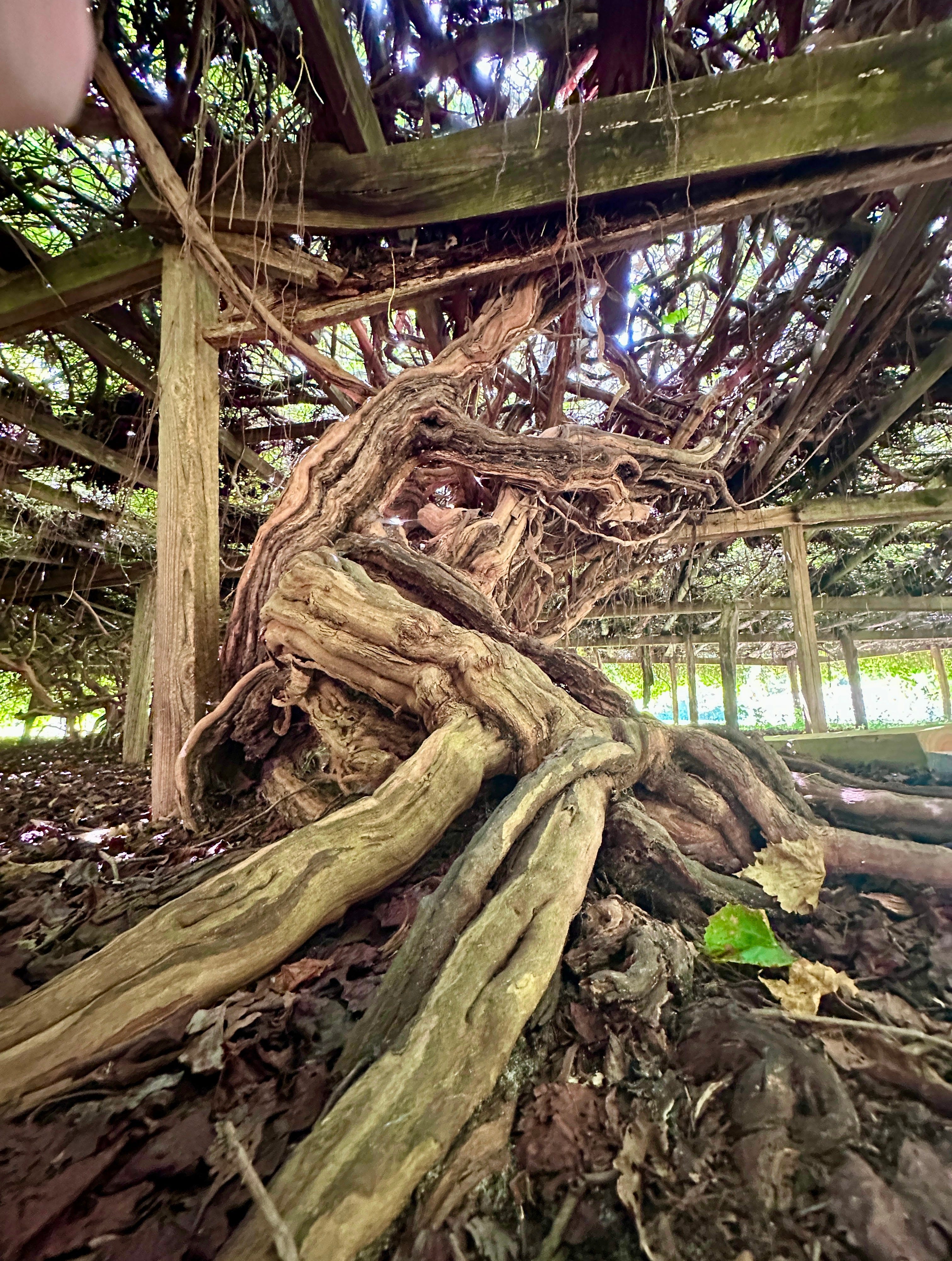
What would it look like to observe our ecological history with the same attention we do the cathedrals of Europe? Here in Southern Appalachia, we live in one of the most biodiverse regions of its size in the world. Wine doesn’t go back as far as farming does here, but the horticultural history that exists can teach us a lot about how to have an appropriate relationship with the land, which, I’m not sure, any of the most famous wine regions have succeeded in doing yet.
What kind of wine culture would be born from a sustainable, appropriate use of the land? Can you sit by the French Broad River, among the oldest rivers in the world, in Appalachia, one of the oldest mountain regions in the world, and envision a vineyard that sells a $95 dollar bottle of wine made from a French grape that can only grow here by killing all the life in the soil? Or is there something else?
From California to North Carolina, these questions are being pursued by winemakers and educators in our industry today. If you want to know more about what is being uncovered, I highly recommend following ABV Ferments and all of the wine professionals in their orbit, all of whose work has informed my perspective.